The Identity Trap at Work: Why Being Yourself Isn’t as Simple as We’re Told
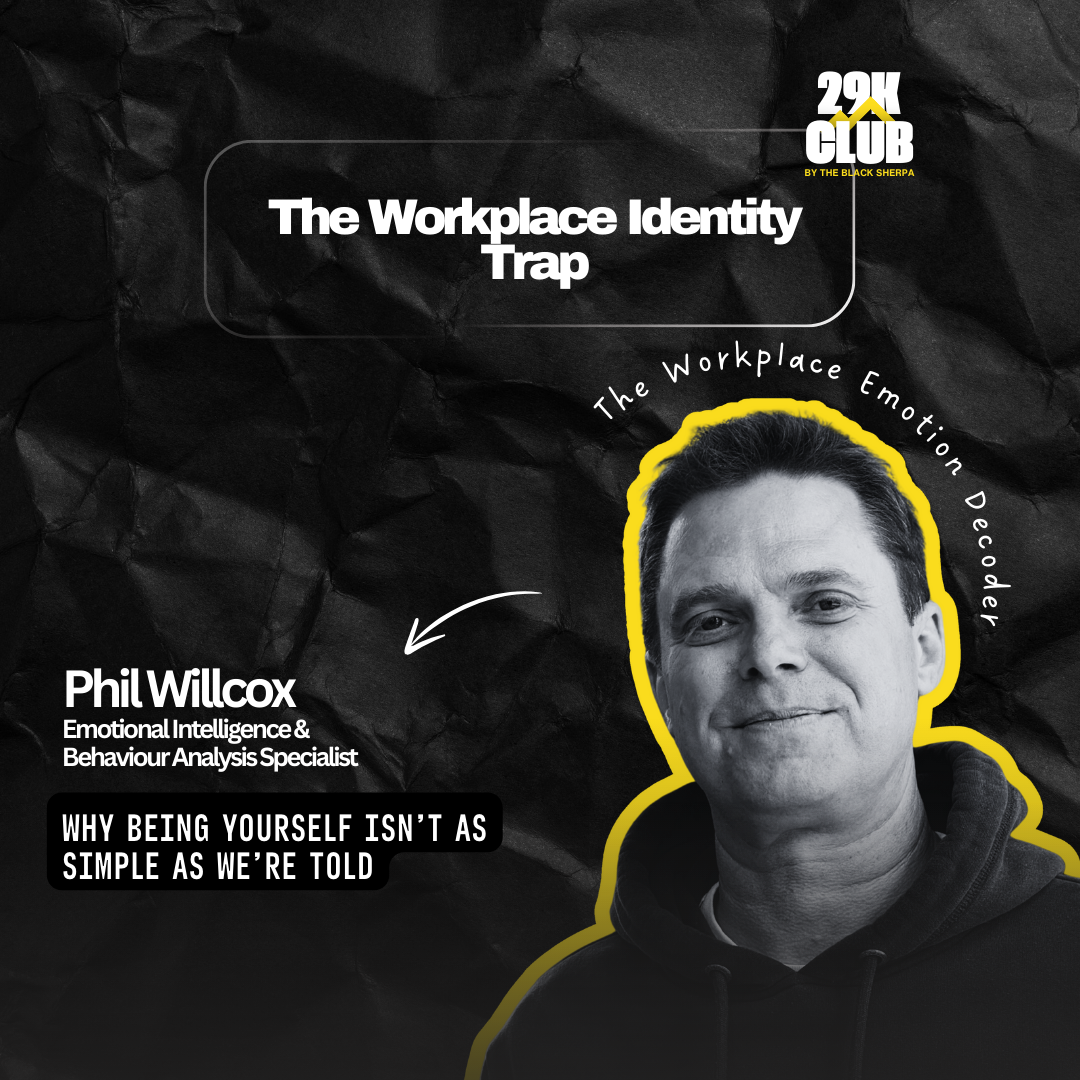
A Black Sherpa 29k Club Masterclass with Phil Willcox
Most professionals don’t struggle because they lack talent. They struggle because the rules for who gets seen, trusted, and backed are rarely spoken out loud.
You can be capable… and overlooked.
Authentic… and penalised.
Values-led… and quietly questioned.
That tension… between who you are and what the system rewards… is where this session began.
“You don’t own your credibility.”
“Authenticity is mostly yours… but sometimes it’s risky.”
“You can be acting in line with your values and still lack credibility in that system.”
“This is complicated… and pretending it isn’t is part of the problem.”
That’s how this session landed.
Not with neat answers.
Not with motivational slogans.
But with honesty… the kind that makes you pause and rethink how you show up at work.
This Black Sherpa 29k Club masterclass explored the identity trap: the tension between who you are, how others see you, and what the system rewards. Led by workplace psychologist and leadership practitioner Phil Willcox, the conversation cut straight through one of the most over-simplified ideas in modern work:
“Just be your authentic self.”
Because for many professionals… especially those navigating power, difference, or visibility… it’s not that simple.
Why identity at work feels so heavy right now
Before we even touched a framework, the room felt it.
People joined juggling real life: deadlines, kids, career uncertainty, end-of-year pressure. I shared a story about losing his laptop on a packed train… the device that now holds his entire working life. Panic. Shame. Self-talk spiralling from “I made a mistake” to “I’m an idiot.”
Every emotion showed up at once.
That moment mattered. Because it reminded us of something essential:
Identity doesn’t only show up in meetings.
It shows up under stress.
When you’re tired.
When the stakes feel high.
This session wasn’t theoretical. It was human.
The mismatch we rarely talk about
Phil opened with a deceptively simple exercise: three questions, the same options, different perspectives.
What matters most to you at work?
What gets you noticed, promoted, or trusted?
What do senior leaders value most?
Across the room, a clear pattern emerged.
People cared deeply about who they are and what they bring.
Progress was driven more by what they’re known for.
Senior leaders, participants believed, prioritised visible contribution and reputation over belonging.
Same options.
Different answers.
That gap is the identity trap.
What matters to you is not always what moves the system.
And pretending otherwise creates frustration, burnout, and self-doubt.
“I’m known for…” And the cost of being reliable
Participants were asked what they’re known for:
“Challenging with kindness”
“Creativity”
“Cross-functional connector”
“The person people call when things get hard”
When asked how it feels to be called on for those strengths, the answers were affirming… valued, trusted, purposeful.
Then came the follow-up:
What’s something you want to shake off?
That’s where the emotional truth surfaced:
“Being misunderstood”
“Seen as too direct”
“Always being ‘the nice one’”
“Imposter syndrome”… which Phil reframed more accurately as the imposter phenomenon: situational, not permanent.
This is where identity quietly turns from asset to constraint.
The thing that gets you trusted can also get you stuck.
And the reputation you didn’t consciously choose can still define you.
When identity work feels familiar… and why that matters
At one point, an attendee made an observation that gently shifted the room:
“It’s funny how familiar this kind of thinking is for neurodivergent people.”
Not funny as in ridiculous.
Funny as in recognisable.
What followed was important.
For many neurodivergent professionals, adapting behaviour, masking traits, or consciously managing how they show up at work isn’t a skill learned later in a career. It’s a survival strategy developed early. Often long before there’s language for it. Long before there’s psychological safety. Long before there’s a choice.
The effort to avoid being misunderstood, mislabelled, or penalised means identity negotiation becomes second nature… not just at work, but across environments. It’s not simply work self versus home self. It’s a cumulative, ongoing calculation that carries a real toll.
And crucially, for many neurodivergent people, this adaptation isn’t optional.
The consequences of not doing it can be severe:
performance management, stalled progression, exclusion, or dismissal. The cost is not hypothetical… it’s lived.
As the conversation unfolded, something else became clear too… but it needed to be held carefully.
Many people, neurodivergent or not, recognise the shape of this experience. Editing themselves depending on the room. Choosing words carefully with certain leaders. Holding back parts of who they are until it feels safer to reveal them.
But while the mechanism may feel familiar, the weight is not shared equally.
The difference lies in frequency, intensity, and consequence.
Neurodivergent professionals are often forced to become fluent in this language earlier, more consistently, and with far less margin for error… long before organisations have the awareness, structures, or vocabulary to recognise what’s really happening.
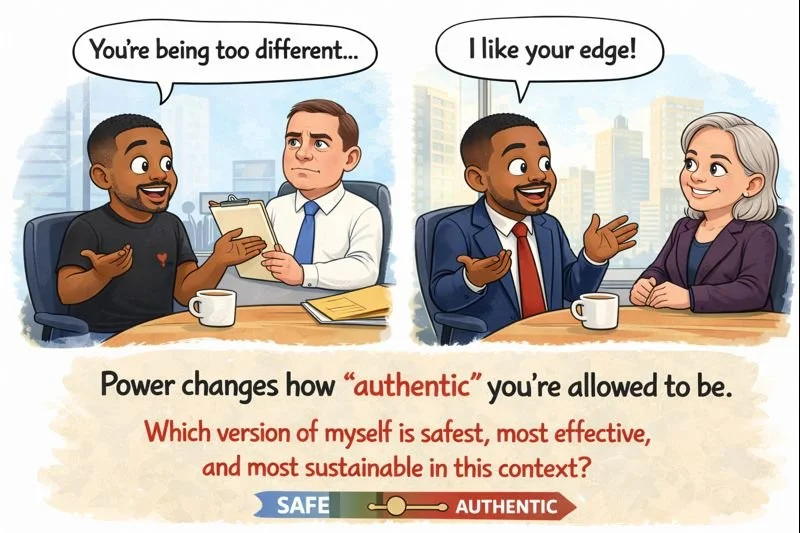
Power changes how “authentic” you’re allowed to be
Another truth surfaced quickly: authenticity isn’t experienced equally.
As one attendee reflected, being yourself often becomes easier the more senior or successful you are. Difference is tolerated… even celebrated… once it’s backed by status. Behaviour that’s questioned in junior roles is often reframed as “style”, “edge”, or “leadership presence” higher up.
That doesn’t invalidate authenticity.
It contextualises it.
Because most professionals, at some point in their career, learn that “being yourself” is not a neutral act. It’s shaped by role, reputation, seniority, and who holds power in the room.
For some, that calculation shows up early.
For others, it only becomes visible when the stakes rise.
Me… also me
The question most professionals are really navigating isn’t:
“Should I be myself?”
It’s:
“Which version of myself is safest, most effective, and most sustainable in this context?”
For many neurodivergent professionals, that question isn’t a thought experiment… it’s a condition of staying employed, being understood, and avoiding harm. The consequences of getting it wrong can be immediate and severe.
For others, the same question emerges later… during promotion, leadership transitions, restructures, or moments of visibility… when they discover that credibility and safety are more fragile than they assumed.
The experience may look similar on the surface.
Again. The cost of misjudging it is not evenly shared.
And that’s the point.
The framework that changed the room
Phil then introduced the distinction that reframed the entire session:
1. Authenticity: Mostly yours to own
Being congruent with your values and beliefs. Sometimes aligned with the system. Sometimes not.
But crucially: being authentic can be risky… psychologically, professionally, financially.
This session didn’t romanticise bravery.
2. Credibility: Never yours to own
This landed hard.
Credibility is socially negotiated, context-dependent, and fragile.
You can be authentic and still lack credibility in that system.
You can be credible in one environment and dismissed in another.
This isn’t a failure of character… it’s how systems work.
And as one participant noted, sometimes credibility loss isn’t real at all… it’s politics, power, or gaslighting.
Lack of credibility does not mean lack of ability.
3. Identity: Nearly all yours to shape
Drawing on sociologist Irving Goffman, Phil described three “faces” we all carry at work:
Competence face: what you’re known for
Personal face: values, beliefs, personality
Company face: who you represent
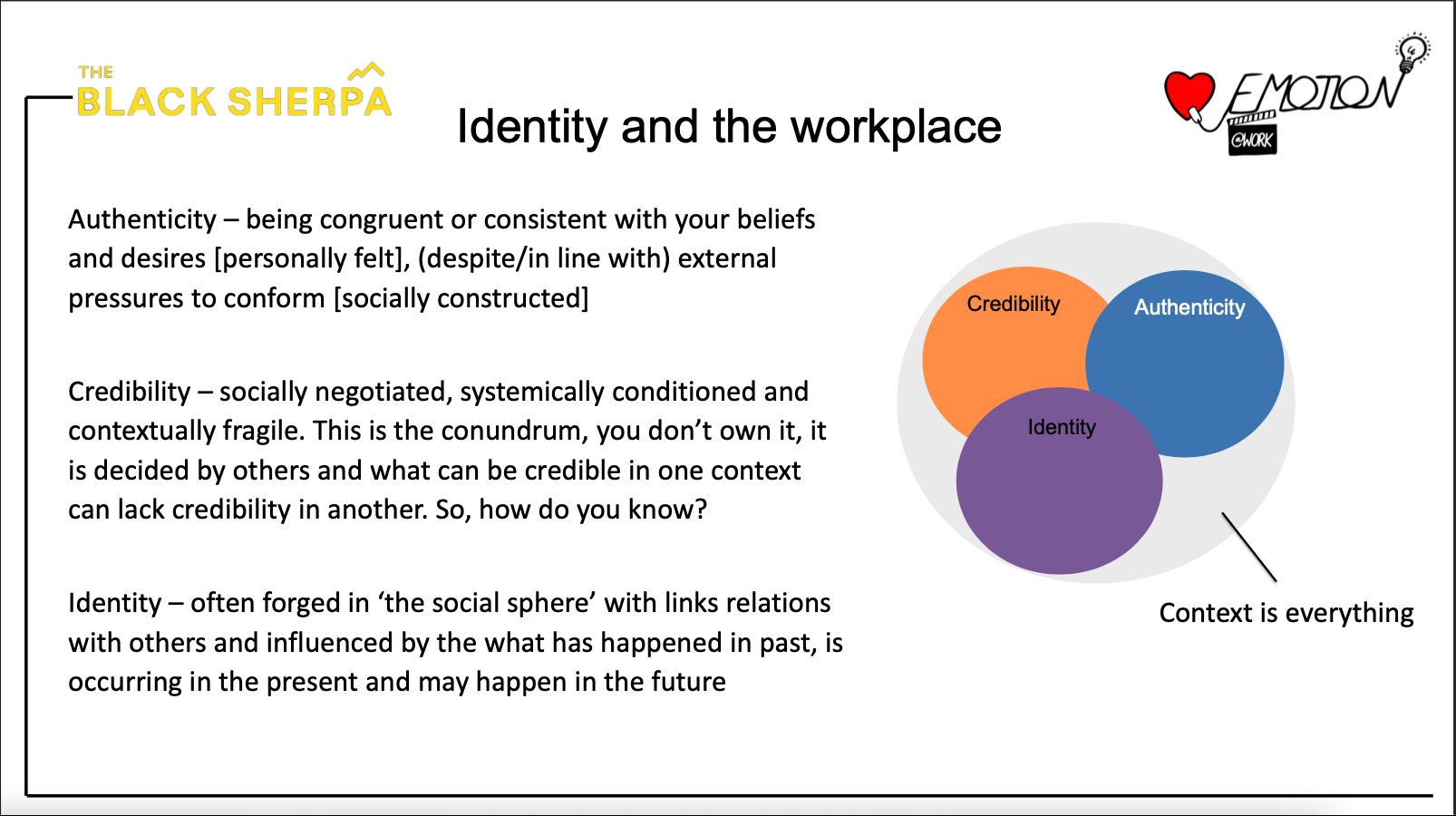
Conflict often happens when feedback aimed at one face is received as an attack on another.
That insight alone helped several people reframe years of misheard feedback.
One practical leadership move that stuck
Amid all the depth, one simple practice stood out:
Contract difficult conversations early.
Phil shared how he explicitly agrees with colleagues:
How do you want me to tell you when something isn’t working?
How quickly?
How directly?
With how much detail?
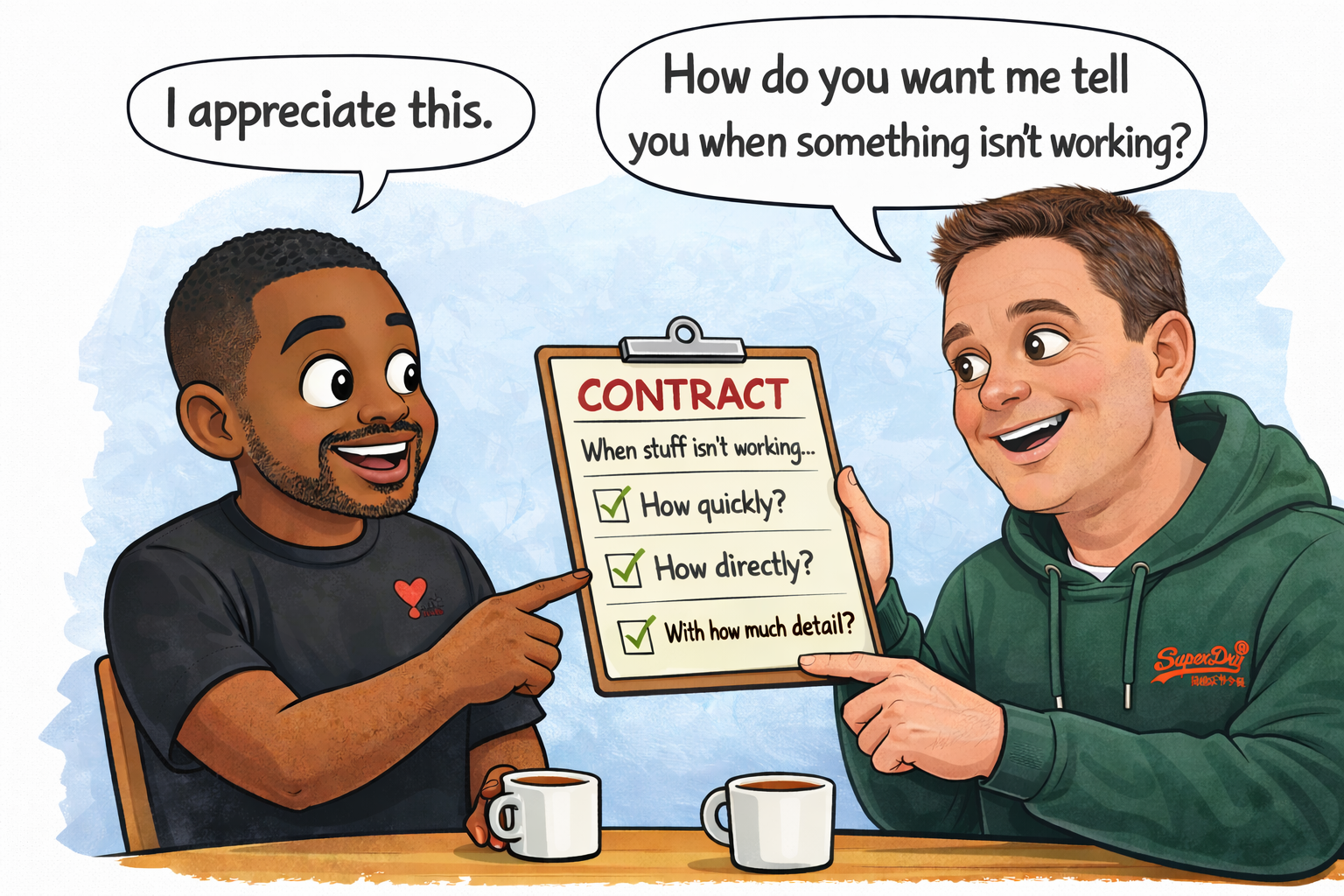
This reduces identity threat before conflict happens.
It’s not soft.
It’s respectful.
And it’s rare.
Why this matters… For people and organisations
Ignoring identity dynamics comes at a cost:
High performers burning out
Feedback being misheard as personal attack
Under represented talent doing extra emotional labour
Leaders mistaking compliance for engagement
But when space is created for these conversations:
People make clearer choices
Emotions inform action, not derail it
Credibility is navigated consciously
Identity becomes a source of agency, not anxiety
The Black Sherpa 29k Club difference
This session was a perfect expression of why The Black Sherpa 29k Club exists.
Not to give people scripts.
Not to sell false certainty.
But to create clarity, confidence, and community… especially for those navigating systems that don’t apply the rules evenly.
Here, complexity isn’t avoided.
It’s respected.
A leadership challenge for you
Before you move on, sit with these:
Which “face” of yours gets rewarded… and which one feels ignored?
Where are you mistaking lack of credibility for lack of capability?
What conversation have you avoided because you never agreed how to have it?
Identity work doesn’t end with answers.
It begins with better questions.
Climb steady 🖤
I’m Yam – Founder of The Black Sherpa
Founder | Strategist | Speaker | Host of The Black Sherpa Podcast
I founded The Black Sherpa to create a world where talent rises on merit and no one’s potential is held back by bias or barriers.
Through bold strategy, storytelling, and our flagship community, The 29k Club - I help professionals grow with confidence and support leaders to build cultures that truly live their values.
Let’s connect and build a future where inclusion powers performance, and leadership reflects the world we serve.